Karl Hector & The Malcouns/Rodinia

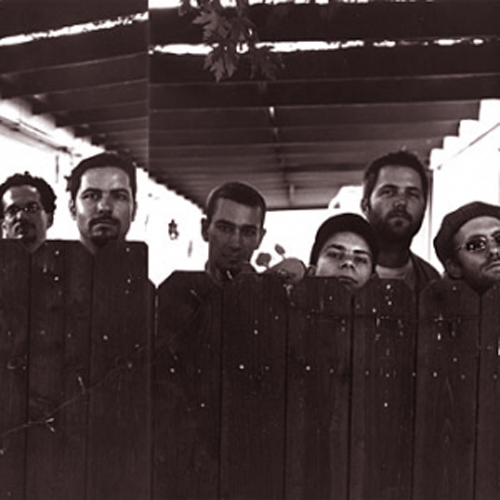
It’s been some years since the first Karl Hector release, and it’s known now that Mr. Hector is indeed the German producer and guitarist JJ Whitefield, ne Jan Weissenfeldt. Whitefield is the visionary behind the Poets of Rhythm and the Whitefield Brothers, the ensembles whose rough analog sound and return to the funk archetypes of the late 60s to early 70s paved the way for labels like Daptone, Truth & Soul, Timmion.

Whitefield, along with Thomas Myland and Zdenko Curlija, founded Karl Hector and The Malcouns in the early 2000s. Their debut, Sahara Swing, saw release on Now-Again in 2008. The album swung with influences from across the African diaspora and set the stage for a cult, but influential following. A grueling tour schedule made recording a follow up album to Sahara Swing quite the challenge, and as a result, the band opted to release limited edition, hand-silkscreened EP’s, which continued to show their deft handling of musics from Eastern and Northern Africa alongside Western psychedelia, jazz and funk.

Unstraight Ahead, the band’s second album, found the band exploring territories even outside of the expansive scope of Sahara Swing. On this album, the West African sounds of Ghana and Mali meet the East African sounds of Mulatu Astatke’s Ethiopian jazz and are tied together with the groove heavy experimentalism of The Malcouns’ 70s Krautrock godfathers: Can, of course, but also more obscure and equally adventurous groups like Agitation Free, Ibliss and Tomorrow’s Gift.

“We look to Middle Eastern funk and psychedelic fusions, and to various ethnic records for sound and phrasing,” Whitefield states. “We’re trying to combine the global experimentalism of Krautrock with the backbeat of funk.” This explains how songs in uneven meters – 5/4, 7/8 – always sound so accessible and natural on Unstraight Ahead. It’s mainly an instrumental affair, but guest artists appear throughout, from across the African diaspora to those from the worldly Krautrock forebears of their German fatherland: it’s Marja, daughter of Embryo founder Christian Burchard, whose vocals open Unstraight Ahead.

Theirs is music out of time, music that couldn’t have been made in the era its aural aesthetics reference, as its scope is so broad. But it’s music focused by funk – and an ambition to expand funk’s reaches.

Rodinia is a JJ Whitefield side project, quite different than anything that’s come from his oeuvre to date, but it follows in the line of the Poets of Rhythm’s great Discern/Define, as it reaches back to Krautrock’s experimental hey day and pushes its boundaries with a post-hip-hop approach.

The ambient sound Whitefield and his Rodinia collaborator – saxophonist and keyboardist Johannes Schleiermacher – reached for found itself morphing over the course of a year. What was originally recorded in a two-day studio lock-in, which found Whitefield and Schleiermacher hooking up “all our vintage synths (Korg MS-20, Moog Prodigy, Roland Juno 60, Jen SX 1000, Korg Polysix), triggering everything with a vintage Korg rhythm box, absorbing some mind altering substances and jamming out,” was later turned into two, side-long suites, with over-dubbed reeds, drums and guitar, and self-made Moroccan field recordings introducing the project on its Drumside, the album’s side-A.

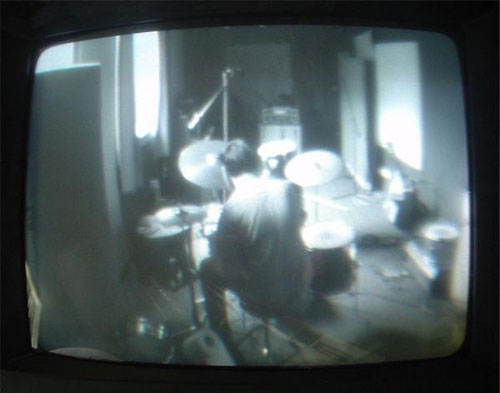
Malcolm Catto

London based drummer, arranger, songwriter, producer. One of the driving forces behind The Heliocentrics, Catto has collaborated with the likes of Madlib, DJ Shadow, Quantic, Mulatu Astatke and contributes regularly to Now-Again artists Mr. Chop, MRR-ADM and The Whitefield Brothers. Above, Malcolm Catto drumming on the MRR-ADM 10″ at Mike Burnham’s Tardis in OZ. Photo by ADM.

Announcing the Now-Again Music Library Series

Yes, you might have guessed based on our release of The Heliocentrics: we here at Now-Again are into Library Records. If you’re asking yourself: “Damn, will I be able to find a copy of the Detroit Sex Machines at my local library?” you’re on the wrong track. We’re into those records put out by music publishing houses such as KPM, Southern, Lupus, SR, Cam and more in the 1960s and 70s when musicians like Nino Nardini, Alan Hawkshaw, Stefano Torrossi and more received carte blanche to create whatever kind of music they liked and they succeeded in creating some of the most beautiful music we’ve ever heard (see Nardini’s Stringtronics, reissued officially by DJ Vadim).

Let’s forget the fact that 9 out of 10 records on an imprint like KPM are barely worth the vinyl that they were pressed on: anyone who owns a copy of The Big Beat Vol. One knows that many of the selections from The Mohawks’ legendary Champ album first saw release there.

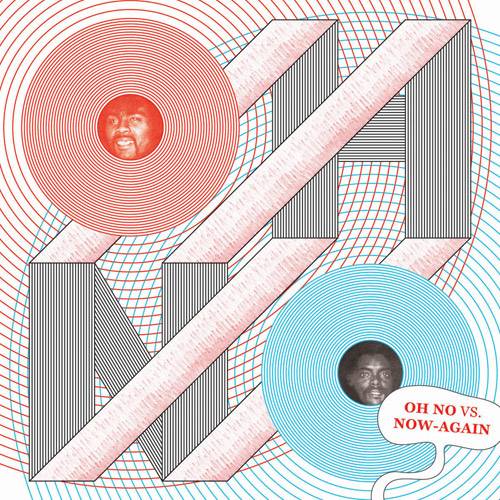
We’ve started our own little Library Series, and ours has a nice twist we’re interested in supplying our producer friends with sample fodder in the form of the hundreds of songs from our catalog to see what they’ll create. First up, we tapped the talents of Oh No, one of our favorite producers. His promo-only CD is floating around in the field now, and, at some point in the future, we’ll probably release it as a limited-edition vinyl LP

Your boy Oh had this to say: “That was an adventure in some real dramatic funk. As I arranged and composed the different variations of the Now-Again catalog, I wanted to bring out the emotions in each instrumental, rangin’ from happiness, depression, confusion and anger.. Music to feel… Feel the music!!!!”

We couldn’t agree more.

Next up: Koushik. Other producers in line include Edan, Madlib, and a few other surprises who you might not associate with the Now-Again flavor but soon will.

Posted in News

Egon’s Eulogy Of Conrad O. Johnson

This letter was originally posted on Stones Throw’s website.

Conrad O. Johnson, bandleader of the Kashmere High School Stage Band from 1968-1978 and owner of Kram Records, the label that issued the Band’s legendary eight albums and three 7” singles of Texas jazz, funk and soul music, died in Houston yesterday at 92 years of age.

He received one hell of a send off. On Friday, the Kashmere Stage Band reunited for a performance at the High School’s auditorium. Filmmaker Mark Landsman, who is producing and directing a documentary on the Band, worked with Johnson’s foundation and Kashmere High School to set off the event for his crew’s cameras. But the reason that the Band’s members, many of whom left the music field after their departure from Kashmere High, reunited and rehearsed, daily, for a month prior to the concert, was to give Johnson the respect he deserved and had fought for, for so long.

Johnson, known by those close to him simply as “Prof” took the reins of the Band in the late 1960s and worked with his charges to perfect the idiom that they understood most: funk. Heavy funk at that. By the time that the band recorded their third album, “Thunder Soul,” they were funking like a mini-JBs. And, by the time they won “Best Stage Band In The Nation” in 1972, they were funking as hard as the JBs themselves.

Yet the Band was relegated to the annals of funk lore, largely due to the fact that the records they released were so rare and, when a collector did get his hands on an original copy, he usually wanted to keep that power for his own ears. A few people did bootleg a song or two in the mid 90s, and, by 2000, the band’s name heated up then fledgling chat rooms when DJ Shadow sampled their namesake track “Kashmere” for the Handsome Boy’s Modeling School cut “Holy Calamity.” With Stones Throw, I reissued “Kashmere,” the first legitimate reissue of a Kashmere Stage Band track, on The Funky 16 Corners in 2001.

The band that performed on “Kashmere” as teenagers back in 1973, including Gerald Calhoun on bass, Earl Spiller on guitar, Bruce Middleton on tenor sax and the indomitable Craig Green on drums, performed the anthem and other Johnson-penned classics like “Zero Point” at the auditorium on Friday. It was overwhelming to say the least. I’m not the kind of person easily impressed by a funk band, and I’m especially critical of those bands that played intensely in the late 60s and early 70s reuniting and performing as a shadow of their monstrous selves. But the Kashmere Stage Band funked like their lives depended on it. By the time they reached the climax on Bubbha Thomas’s modal jazz classic “All Praises To Allah,” and Craig Green rode the uptempo breakbeat like Clyde Stubblefield and Gerald Calhoun plucked those same staccato notes that danced along those same rhythms nearly forty years ago, I stood breathless.

After the event, I mentioned to Prof’s son that there were still some Kashmere albums at Prof’s house on Rosewood Drive that I needed to transfer, for the possibility of assembling a compilation of Kashmere’s ballads. He told me that the family had moved Prof out of the house he’d lived in for nearly sixty years, and that he had moved all of Prof’s records into a storage unit on the side of the house. I made my way over and sorted through everything on Saturday, becoming more inspired as I went through the stacks of vinyl. The man’s recorded output with that stage band was just tremendous, and the fact that he had kept such meticulous archives of his music, well into his 90s, blew me away.

On Sunday, I drove out to Conrad Jr.’s house to catch up with Prof before leaving for Los Angeles. When I arrived, vinyl in hand for safe delivery, I sat and talked with Prof… we had one of the best talks we’d had in months. We talked about the band, and how good they sounded (“Doggone! Man, could they have sounded any better?” he asked), about Bubbha Thomas and his Youthful Musicians Summer Program and the 45 that they released in the mid 70s – a cover of Prof’s “Lost Love,” about future performances of the band, and, of course, about future anthologies of the band’s recordings. He was most excited about that. Smiling, laughing, and gently prodding me with the same types of questions he did over the first years of our musical courtship (“Look here man, how are you going to do it? With what songs? From where? With the reel to reels?”) – and, of course, making sure his business was straight.

He was so thrilled, so happy, so with it… I left feeling uplifted. I hadn’t just spoken with a sick man, a man recovering from the heart attack that had confined him to a hospital bed just days before. I had spoken with a peer – a man who was going to be with us forever – carefully stewarding the next steps of his legendary Band, the band whose legend seems to grow greater by the day.

In a way, he will be.

Posted in News

Breakestra

Miles Tackett’s Breakestra project first saw release on Stones Throw Records. Egon A&Red this album, The Live Mix Part One, in 2000 – one of the first projects he coordinated for Stones Throw Records. The ensemble records and releases music for Now-Again from time to time to time.