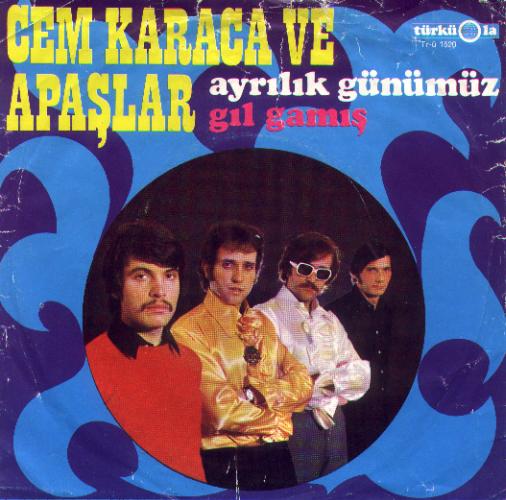
Cem Karaca ve Apaslar – Gilgamis (Turkola, early 70s)

Listen: “Gilgamis.”

Apaslar was one of the first groups with the “Anatolian” rock style; in the early 1960s, Mehmet Soyarslan and Yalcinkaya Tumer already did Turkish folk melodies on their electric guitars. Later collaborations with singer Cem Karaca put them at the top of the Turkish pop charts. Gilgamis, the b side off this 7″ from 1969 and written by Soyarslan, is instrumental without the voice of Cem Karaca. It starts with a couple bars of solo electric bass from player Seyhan Karabay, followed by Leon Habib – the epitome of a Turkish rock drummer. For me, that’s all I need: heavy drums and bass. Untill Mehmet Soyarslan’s electric guitar layers on, completing the trio. This is my personal favorite Turkish instrumental of all time and it will be one of many tracks featured on the new podcast mix Egon, MRR, and I have in the making.
– ADM

Posted in Picks

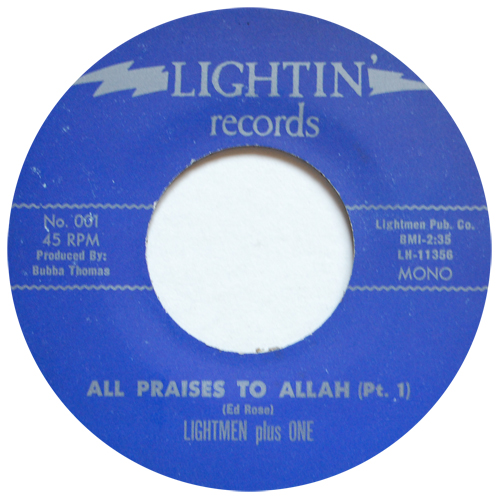
Lightmen Plus One – All Praises To Allah (Lightin’ Records, 1972)


Lightin’ Records, early 70s

Listen: “All Praises To Allah.”

So, it’s officially cool for guys that were into funk (exclusively, mind you) to obsess over modal jazz. I vaguely recall the days when most funk collectors looked at those who collected modal jazz as they’d regard the poor sap caricatured as the lame, tweed-wearing “jazz guy” in Jerry Maguire who professed his love for In A Slient Way. Well, that is, besides the likes of Gerald Short, who always stood one step ahead of his peers and recently released an excellent comp of the stuff. It’s hard for the most hard-headed funk-nerd to scoff at Salah Ragab’s “Neveen,” so thanks G.

I knew something was up, then, when I got an early morning call from my English friend telling me about a heated auction that was about to end on eBay. At stake, “All Praises To Allah” by the Lightmen Plus One. “Isn’t that on one of the albums?” I inquired, before thumbing through my shelves in disbelief. No, indeed this song only ever saw release as a poorly-disributed 45 on Bubbha Thomas’s Lightin’ Label. Luckily, I’d found a couple copies back on my first trips through Texas, so I threw it on the turntable and was blown away.

What had I been thinking, when, after I first found this 45, I convinced myself I liked The Kashmere Stage Band’s funk cover (on their Zero Point LP) better? This track rocks! So here I stand, another one of those ex-funk snobs who now intersperses the likes of this song in his DJ sets. Well, at least I had the foresight to buy these records when no one else would pay five dollars for ’em. There’s some justice in that? Surely?

Posted in Picks

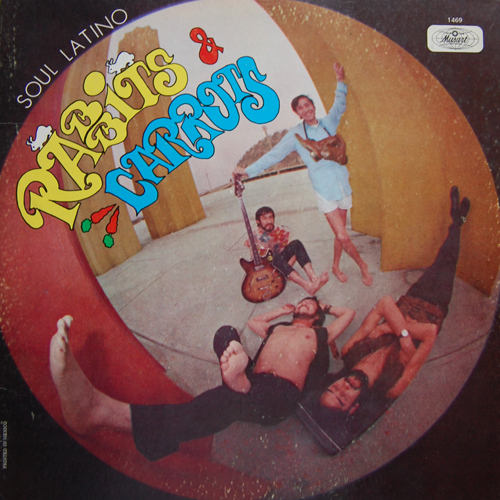
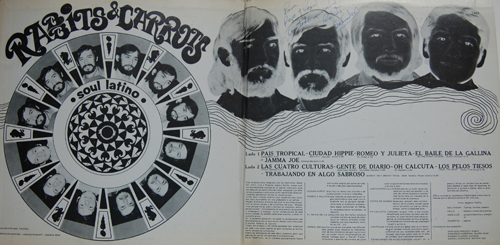
Rabbits and Carrots – Soul Latino (Musart 1970)

Listen: “Las Cuatras Culturas (Edit)”

Ok. I’ll just step out there and say it: funk just doesn’t get better than James Brown. Or those who can competently imitate him (see: Carleen and The Groovers) or cover his funkiest songs. Hence, we’re now talking about Mexico’s finest funk group, who have the silliest name, the Rabbits and Carrots.

Phillipe Lehman, of Desco, Soul Fire, and “The Best Funk Collection In The World” fame, played me this album the same day that he played me The Universoul’s “New Generation” and Brother Williams “Cold Sweat.” Every track on the album hit hard, but the stand out, at least at that time, was their obvious rip off of “Give It Up Turn It Loose” which they renamed “Las Cuatras Culturas.”

Some years later, when I finally found the record in Japan for sale northward of six hundred bucks, the track had held up to my mind’s recollection. And the band’s dirge-like cover of “Love Theme From Romeo and Juliet” convinced me that I’d found the pinnacle of Mexican psychedelic-funk.

That is, until I found out about the band’s four song 7″ EP that contained a killer version of JB’s “Sex Machine” alongside the heaviest cover of Charles Wright’s “Express Yourself.” You can find those on Vampisouls official reissue of the R and C’s album (CD only!) and you can find this edit of “Las Cuatras Culturas” on the James Brown cover compilation Get Back! Save yourself the time and money – these Musart pressings never show up, and when they do, they’re just too hammered to spend any real money on.

Posted in Picks

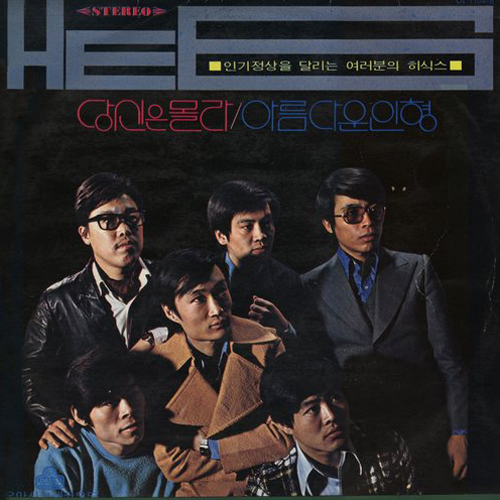
He 6 – Beautiful Doll (Universal South Korea 1972)

Listen: “Get Ready”

We told a bit of Seoul’s He 6’s story in a previous pick. Their earlier incarnation, the He 5, deserves note for producing the most fuzzed out Christmas album in a country that’s famous for such novelties. But the psychedelic-funk heads are more into the band as a sextet, and for good reason. Their first two albums as the He 6 contain some gorgeous psychedelia, subtly funky, and accompanied by soaring choruses. Their sought after Go Go Sound ’71 albums are amongst the rarest in all of Korea and, as instrumentals, are easy on Western ears not attuned to the nuances of Korean singing.

This album, released after their second Go Go Sound album, is the album that turned me on to Korean psych. To give credit where it’s due, a certain Bay-Area producer sampled a track from this album in the mid 90s, a friend who was in the studio mentioned this “insane Korean record” to me, and, some years later I heard from yet another producer, in one of those “six degrees of separation” moments, that he had found a reissue of the album in Australia, where one of the band?s original members transplanted himself sometime after the He 6 took on disco and (happily) disbanded.

So I’m no pioneer at this, just one idiot in the line of many, buying any wild looking Korean record for way too much money only to find out that “Go Go” could mean “sounds like Peggy Lee” as easily as it could mean “sounds like Cream,” and only to find out that most collectors in Seoul took lessons from their counterparts in Addis Ababa as to how to care for their vinyl.

All of that is worth it, of course, with one listen to this epic cover of the Rare Earth’s “Get Ready.” At once an excuse to stretch out into the outer realms of commercial accessibility and a lesson in restraint introduced by a deep study of funk (or funk-influenced rock, as it were), this fourteen minute jam builds momentously from start to finish.
Posted in Picks

Lost Legends Of Ethiopian Funk

Listen: “Menelik Wossenachew – Chereka

Link: Egon’s NPR piece here.

We record collectors of the hip hop generation first discovered the music of Ethiopia’s Mulatu Astatke in the early 1990s, when dealers at the legendary Roosevelt Hotel Record Convention in Manhattan peddled copies of Mulatu of Ethiopia, released on the small Worthy imprint, for princely sums due to its then unknown drum break, rife for the sampler. Those of us entranced by the other worldly sounds of the Ethiopian qenet system fused with Western funk and jazz, searched in vain for other albums that sounded like this masterpiece until Francois Falcetto released Ehiopiques Vol. 4 , a compilation of the two supremely rare albums Astatke released on the Ethiopian Amha label.

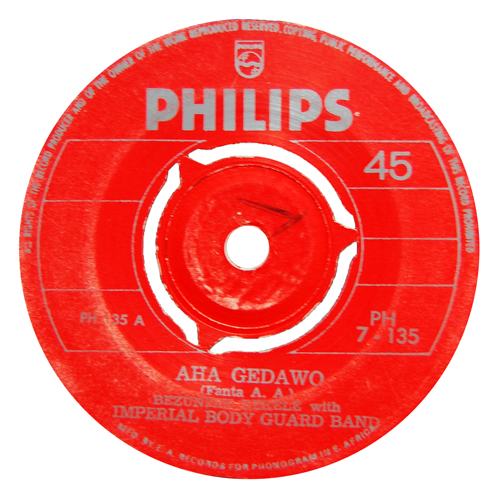
Through Falcettos series, Jim Jarmusch’s Broken Flowers movie (built around Astatke’s Amha recordings) and Astatke’s recent live appearances, many Westerners previously unfamiliar with the transfixing beauty of 70s Ethiopian fusion have opened their ears. But we’re still waiting for someone to compile releases from the small Kaifa label and Phillip’s Ethiopian subsidiary. We present a smattering of them here and hope that someone goes back and negotiates the release of these works.

Above – Menelik Wossenachew’s “Chereka,” written and arranged with Girma Beyene and released on Amha Records in the early 1970s.

Posted in Picks